Can I Convert My Garage If It Has A Fuse Box?
Garage Conversion Fuse Boxes Explained
One of the most common concerns homeowners have when considering a garage conversion is discovering that the property's fuse box or consumer unit is located inside the garage.
Many people immediately assume this means a garage conversion isn't possible, will be extremely expensive, or will require major electrical work before the project can even begin.
The good news is that in most cases, a fuse box inside a garage does not prevent a garage conversion from going ahead.
In fact, it's a situation we come across regularly throughout Greater Manchester and the North West.
The key is understanding where the fuse box is located, whether it needs to remain accessible, and what solutions are available to incorporate it into the finished room while remaining compliant with electrical regulations and building control requirements.
If you're wondering whether your garage can still become a bedroom, home office, gym, snug or utility room despite having a fuse box, this guide will explain everything you need to know.
Can You Convert A Garage If It Has A Fuse Box?
In most cases, yes.
A fuse box is simply part of your home's electrical installation and its presence does not automatically prevent a conversion.
Many garages were originally designed to house electrical equipment, boilers, meters and utility services. As a result, finding a consumer unit in a garage is extremely common.
The important factor is ensuring that the fuse box remains accessible for maintenance, inspection and emergencies.
This means it cannot simply be plastered over or permanently hidden behind fixed construction.
Instead, the conversion design must allow appropriate access while creating a neat and practical finished room.

What Is A Fuse Box And Why Is It In My Garage?
A fuse box, also known as a consumer unit, controls and protects your property's electrical circuits.
Its purpose is to:
Protect electrical circuits
Prevent overloads
Reduce fire risks
Allow circuits to be isolated safely
Provide protection through modern RCD devices
Many homes built during the 1970s, 1980s and 1990s had their consumer units installed in garages because they provided convenient access and kept electrical equipment away from main living areas.
As homeowners increasingly convert garages into usable rooms, these fuse boxes often become a consideration during the design process.

Does The Fuse Box Need To Be Moved?
Not necessarily.
One of the biggest misconceptions is that every fuse box must be relocated before a garage conversion can proceed.
In reality, many fuse boxes can remain exactly where they are.
The decision depends on:
Its location
Accessibility requirements
Room layout
Building regulation requirements
Future maintenance needs
In many projects, retaining the existing position is the most practical and cost effective solution.
How Are Fuse Boxes Hidden During A Garage Conversion?
Most homeowners understandably do not want a fuse box visible on the wall of their new room.
Fortunately, there are several solutions.
Purpose Built Cupboards
One of the most popular options is installing a fitted cupboard around the fuse box.
This keeps the consumer unit hidden while maintaining full access when needed.
Utility Room Storage
If the garage is becoming a utility room, the fuse box can often be incorporated into storage cabinetry.
Built In Furniture
Home offices, gyms and snugs can often include custom storage that discreetly houses electrical equipment.
The result is usually a clean and tidy finish where visitors would never realise the fuse box is present.

What Building Regulations Apply?
Building regulations play an important role in every garage conversion.
When a fuse box is present, the main concern is maintaining safe access.
Building Control will typically want to ensure:
The consumer unit remains accessible
Electrical installations are safe
Any new circuits comply with current standards
The room meets insulation requirements
Fire safety requirements are met
Ventilation requirements are satisfied
At Convert Your Garage, every project is inspected through Building Control, ensuring compliance throughout the conversion process.
Do I Need Planning Permission?
In most cases, planning permission is not required simply because a fuse box exists inside the garage.
Most garage conversions fall under permitted development rights.
However, planning permission requirements can depend on:
Local planning restrictions
Previous planning conditions
Conservation areas
Listed buildings
Significant external alterations
The presence of a fuse box itself rarely affects planning permission requirements.
Will Moving A Fuse Box Increase Costs?
Potentially, yes.
If the fuse box must be relocated, additional electrical work may be required.
The cost depends on:
The complexity of the move
Existing wiring routes
Consumer unit age
Whether upgrades are required
The new location
However, many homeowners are pleased to learn that the fuse box can often remain where it is, avoiding unnecessary expense.
For this reason, it's important not to assume a garage conversion will become significantly more expensive simply because a fuse box is present.
Common Homeowner Concerns
Will The Fuse Box Look Unsightly?
Usually not.
Modern garage conversion designs often incorporate cupboards, storage units or cabinetry that conceal electrical equipment very effectively.
Is It Safe To Have A Fuse Box In A Bedroom?
Yes, provided the installation complies with regulations and remains accessible.
Will Building Control Reject The Conversion?
Not usually.
Building Control simply requires safe and compliant access arrangements.
Will It Reduce The Space Available?
In most cases, very little space is lost.
Many solutions can incorporate the fuse box within existing storage designs.
What Rooms Can Still Be Created?
A fuse box rarely limits what your garage can become.
Homeowners are often surprised by the variety of rooms that remain possible.
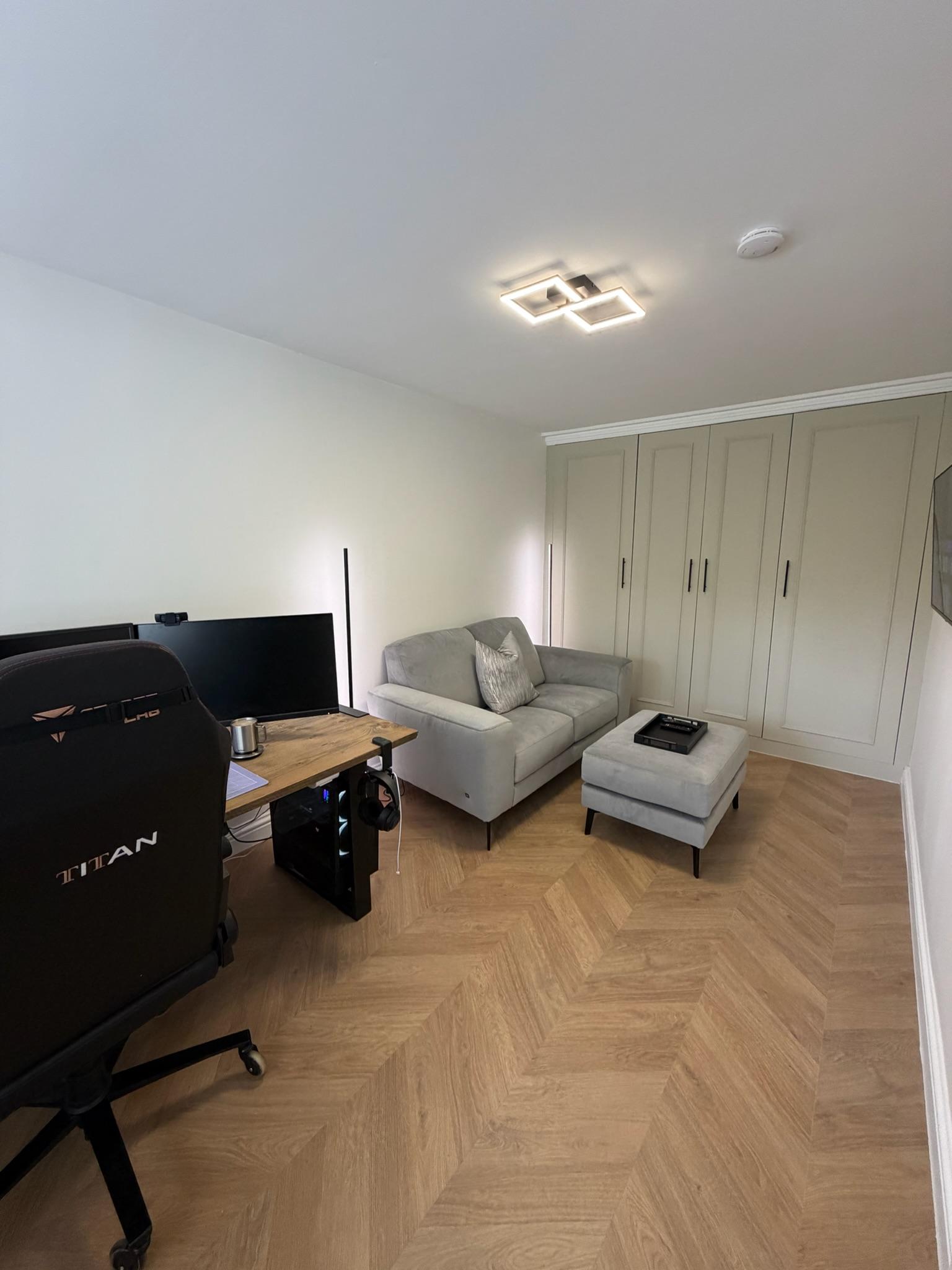
Home Office
A fitted cupboard can conceal the fuse box while creating a professional workspace.
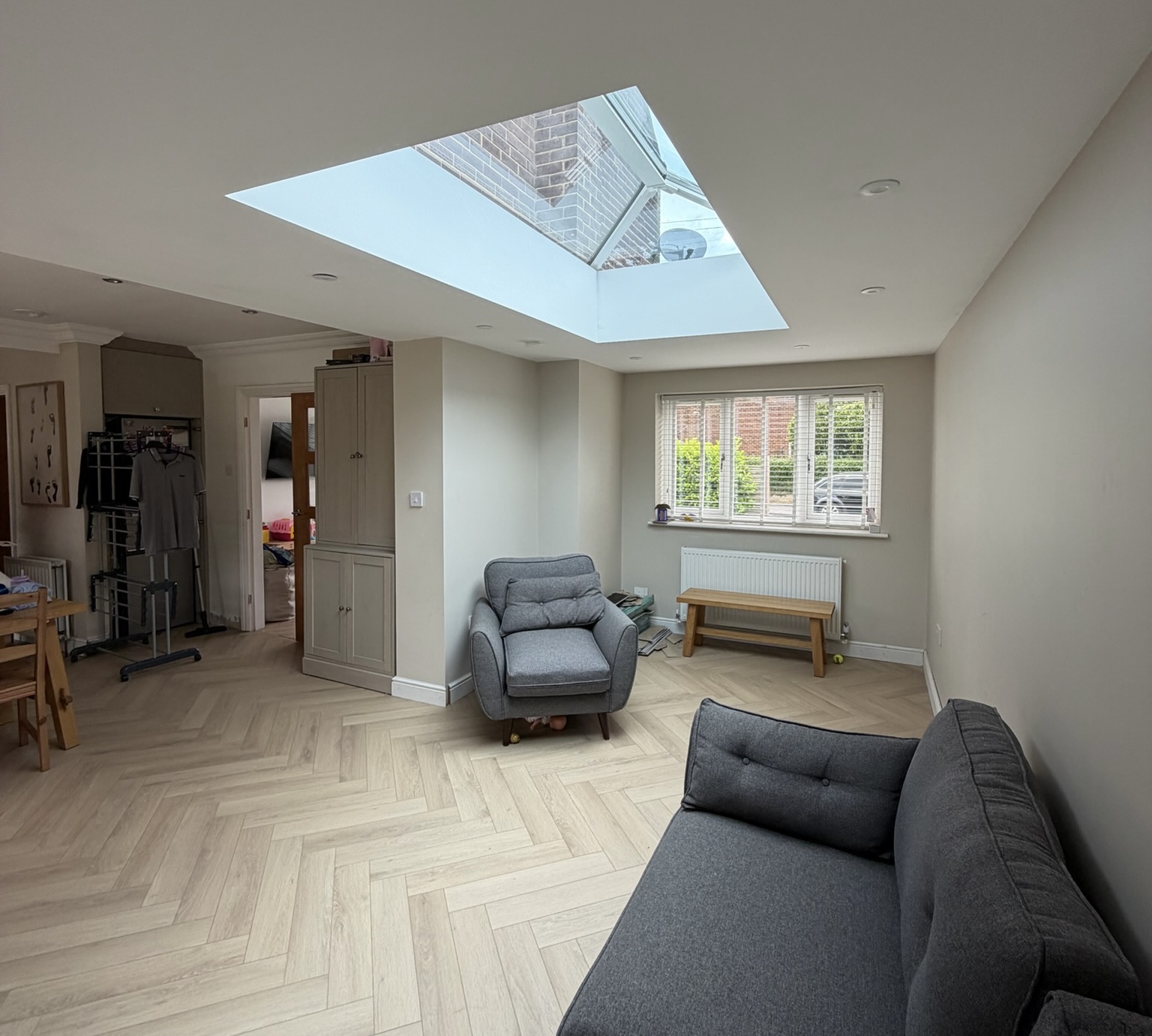
Bedroom
Consumer units can often be incorporated into wardrobes or storage cupboards while maintaining compliance.
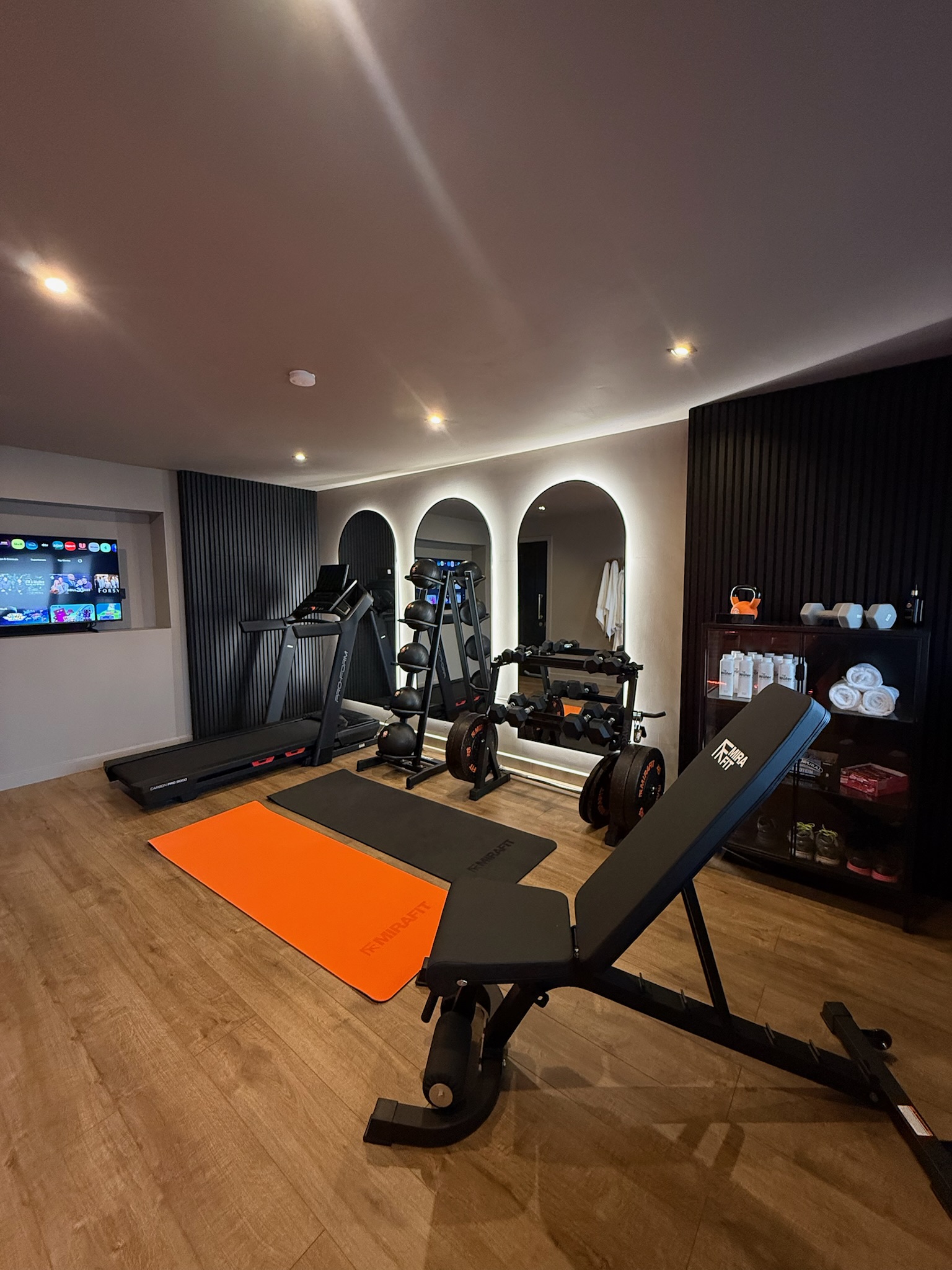
Home Gym
Storage units are commonly used to conceal electrical equipment within gym layouts.
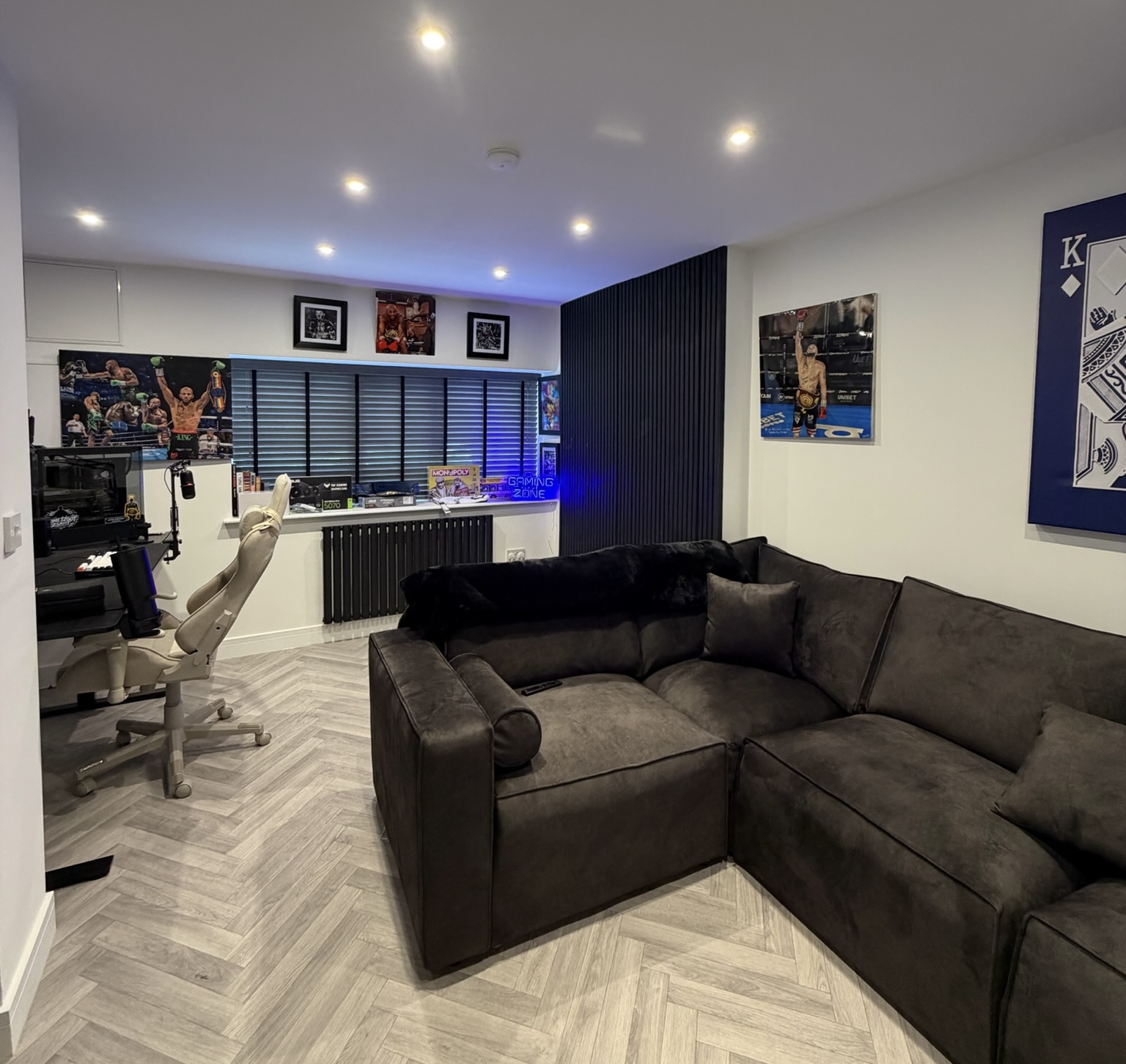
Snug Or Lounge
Built in furniture can hide electrical installations while creating a comfortable living space.
Utility Room
This is often one of the easiest solutions because cupboards and storage are already part of the design.
Playroom
Families frequently choose integrated storage that conceals both electrical equipment and everyday clutter.
The finished result usually looks no different from a conversion without a fuse box.
Real Example From Greater Manchester
One of our recent projects involved a garage conversion where the consumer unit was positioned prominently on a side wall.
The homeowner initially assumed the electrical equipment would need relocating before the conversion could proceed.
Instead, the room design incorporated a fitted storage solution that concealed the fuse box while retaining full accessibility.
The completed space became a practical family room, and most visitors would never realise the fuse box remained in its original location.
Situations like this are extremely common across Greater Manchester and the North West.
What Other Services Might Be Found In A Garage?
Fuse boxes are often not the only utility service found in garages.
Other common examples include:
Boilers
Gas meters
Water meters
Manhole covers
Drain inspection chambers
Just like fuse boxes, these features rarely prevent a conversion from going ahead.
Experienced garage conversion specialists can usually incorporate them into the final design while maintaining access and compliance.
Will A Garage Conversion Still Add Value?
In many cases, yes.
The presence of a fuse box generally has little impact on the value added by a successful garage conversion.
Creating a new usable room can often provide:
Additional living space
Improved functionality
Greater buyer appeal
Better use of existing floor area
While every property is different, a professionally completed conversion is often viewed more positively by buyers than an underused storage garage.
Frequently Asked Questions
Can a fuse box stay in a converted garage?
Yes. In many cases it can remain in its existing position provided access is maintained.
Does a fuse box need to be moved before a garage conversion?
Not always. Many fuse boxes can remain where they are.
Can a fuse box be boxed in?
Yes, provided suitable access is retained.
Will Building Control approve a garage conversion with a fuse box?
Usually yes, as long as regulations are met.
Can I turn my garage into a bedroom if it has a fuse box?
Yes. The fuse box can often be incorporated into storage solutions.
Can I convert my garage into a home office if it has a fuse box?
Absolutely. Home offices are one of the most common garage conversion uses.
Is it expensive to move a fuse box?
Costs vary depending on complexity, but many projects avoid this expense altogether by retaining the existing location.
Will a fuse box affect property value?
Not normally. Buyers are usually far more interested in the additional living space created by the conversion.
Can I keep storage as well as the fuse box?
Yes. Many homeowners combine storage solutions with fuse box access.
How long does a garage conversion take if a fuse box is present?
In many cases, no additional time is required because the fuse box can be incorporated into the design.
Why Homeowners Across The North West Choose Convert Your Garage
Since 2002, Convert Your Garage has completed more than 4,315 garage conversions across Greater Manchester and the North West.
We've worked with garages containing boilers, fuse boxes, gas meters, manhole covers and countless other features that homeowners initially believed would prevent a conversion.
Our experience allows us to identify practical solutions that minimise disruption while creating a finished room that feels like a natural part of the home.
Every conversion includes Building Control approval, a 10 year warranty and a dedicated team managing the project from start to finish.
You can also view our latest projects and customer transformations on our Facebook page at https://www.facebook.com/convertyourgarage/?locale=en_GBand our TikTok page at https://www.tiktok.com/@convertyourgarage.
Final Thoughts
Finding a fuse box inside your garage should not stop you exploring a garage conversion.
In most cases, the consumer unit can either remain in place or be incorporated into the room design through practical storage solutions that maintain accessibility and comply with regulations.
Whether you're planning a home office, bedroom, gym, snug, playroom or utility room, a fuse box is usually just another design consideration rather than a barrier to the project.
If you're unsure whether your garage can be converted, the best next step is arranging a professional survey.
Our team can assess the existing layout, explain the available options and show you exactly how your garage could be transformed into a valuable new living space.
