Do You Need A Party Wall Agreement For A Garage Conversion?
We’ve written before about how the Party Wall Act applies to home extensions, but it’s a question that comes up just as often for garage conversions, and the answer genuinely depends on your specific garage and what the work involves. Here’s when it applies, when it doesn’t, and why the answer isn’t the same for every garage.
What Actually Triggers The Party Wall Act
The Party Wall etc. Act 1996 applies to work that affects a shared wall between two properties, or excavation close enough to a neighbouring foundation to affect it. It has nothing to do with the type of project, extension or garage conversion, it’s entirely about whether the specific work touches a shared structure or boundary. We’ve covered the fuller detail of how the Party Wall Act works, including the notice process and what happens if it’s skipped, so this article focuses specifically on how it applies to garage conversions rather than repeating that ground.
Integral And Attached Garages Are Where This Usually Applies
If your garage is integral or attached to the house and shares a wall with a neighbouring semi-detached or terraced property, that shared wall is very likely a party wall. Work that involves cutting into it, inserting steelwork, or altering its structure as part of your conversion would typically bring the Act into play.
This doesn’t mean every integral garage conversion needs a Party Wall Agreement. It depends on whether the specific work you’re planning actually touches that shared wall, rather than the mere fact that one exists next to your property.
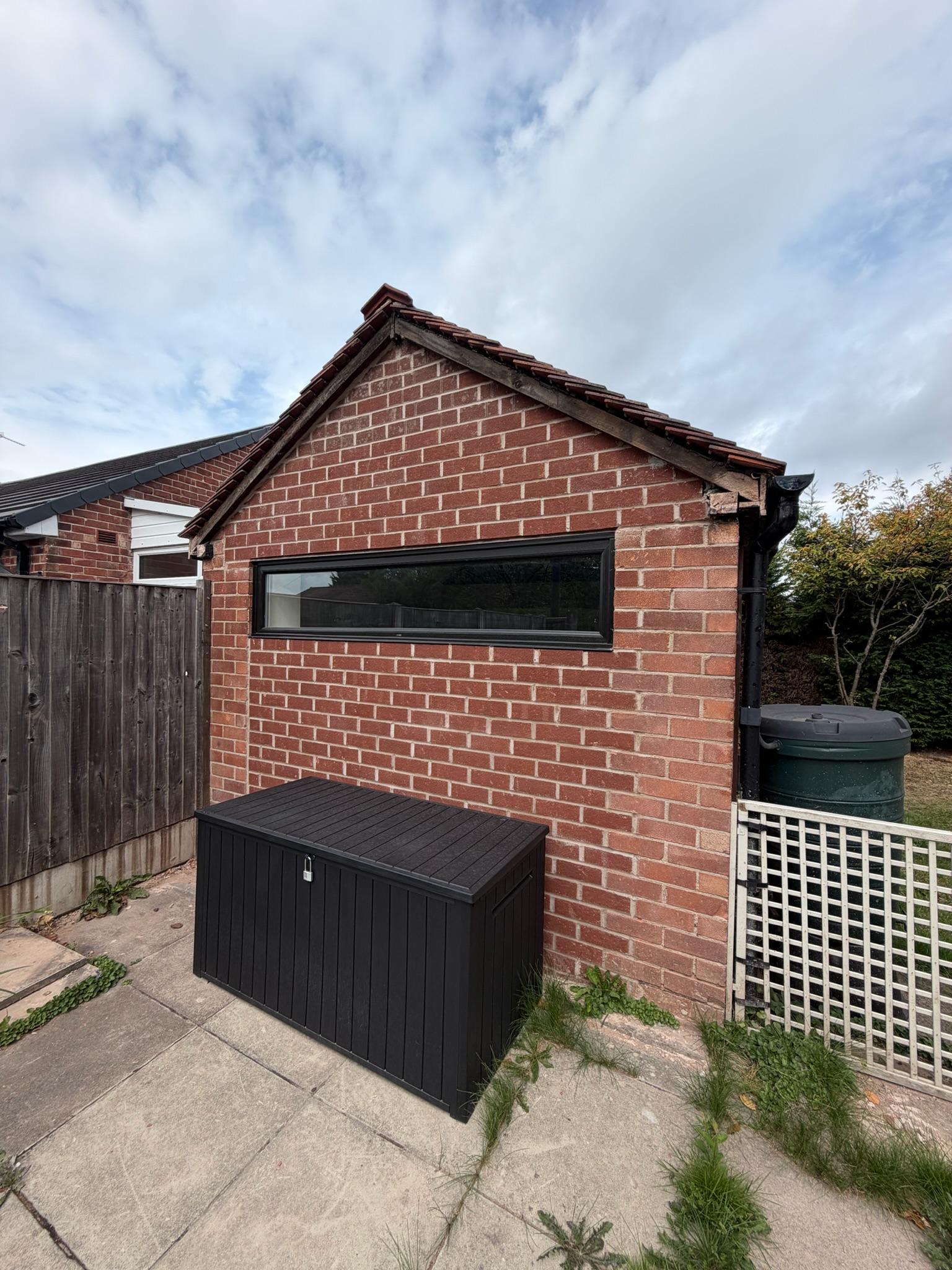
It’s also worth knowing that the shared wall doesn’t have to be the one with the garage door in it for this to apply. Plenty of integral garages have a party wall running down one side, shared with next door, even though the main structural changes homeowners picture, infilling the door opening, adding windows, happen on a completely different elevation. This is exactly why it’s worth having your specific layout properly assessed rather than assuming the answer based on the type of work you’re planning.

Detached Garages Are A Different Situation
A fully detached garage, standing separately from both your house and any neighbouring property, is far less likely to trigger the Party Wall Act, simply because there’s usually no shared wall involved at all. It’s not automatically exempt, though. If excavation for new foundations happens close enough to a neighbouring boundary or structure to potentially affect it, the Act can still apply even without a literal shared wall.
Foundations Are Often The Real Trigger, Not The Walls Themselves
A lot of homeowners assume the Party Wall Act is only about the wall itself, but excavation is just as significant a trigger. If your garage conversion involves digging new foundations, which is common where the original garage door opening is being filled in with a new wall, and that excavation happens within the distances set out in the Act relative to a neighbouring building, notice may be required even on a garage that doesn’t share a structural wall with next door. We’ve written more about whether garage conversions need new foundations, which is worth reading alongside this if your project involves filling in the garage door opening.
What This Means In Practice
Because this genuinely depends on your specific garage, whether it’s integral or detached, how close it sits to a boundary, and what the proposed work actually involves, we assess this properly during your survey rather than giving a generic answer. If a Party Wall Agreement is likely to be needed, we’ll flag it clearly at the design stage and factor the notice period into your overall project timeline, in exactly the same way we would for an extension.
This also connects to the wider planning permission position for your garage conversion, since Party Wall matters and planning permission are two entirely separate legal processes that can both apply to the same project, and it’s worth having a clear picture of both rather than assuming that clearing one automatically clears the other.
Talking To Your Neighbour Early
Even where the Party Wall Act formally applies, a quick, friendly conversation with your neighbour before any formal notice lands tends to make the whole process smoother. Most people are perfectly reasonable about a garage conversion once they understand what’s happening and roughly when, and a heads up over the fence often means the formal side of things is a formality rather than a surprise.
Common Misconceptions About Party Walls And Garage Conversions
A lot of homeowners assume that because they’re only converting a garage rather than building a full extension, the Party Wall Act simply doesn’t apply to them. That’s not a safe assumption either way, it genuinely depends on the specifics of the garage and the work involved, not the scale of the project.
Another common misconception is that a neighbour can use the Party Wall Act to block a garage conversion outright. They can’t. The Act exists to make sure the work is carried out properly and any damage addressed, not to give a neighbour a veto over a lawful conversion.
Questions Homeowners Often Ask Next
A few practical questions tend to follow once people understand the basics.
Does converting a detached garage ever need a Party Wall Agreement? It can, though it’s less common, and it usually comes down to how close any new foundation work is to a neighbouring boundary or structure.
How do we know for certain if our garage conversion needs one? A proper assessment of your specific garage and proposed work is the only reliable way, which is exactly what we do at survey stage.
Will this add significant time to our project? Where it applies, the notice period needs to be factored into your timeline, but it’s something we plan for from the outset rather than a surprise partway through.
Frequently Asked Questions
Does every garage conversion need a Party Wall Agreement?
No. It depends on whether your garage shares a structural wall with a neighbouring property, and whether the proposed work, including foundation excavation, is close enough to a boundary to be covered by the Act.
Do detached garages ever need a Party Wall Agreement?
It’s less common than with integral or attached garages, but it can still apply if foundation excavation happens close enough to a neighbouring boundary or structure to potentially affect it.
What kind of garage conversion work typically triggers the Party Wall Act?
Cutting into or altering a shared wall, and excavating new foundations near a boundary, are the two most common triggers, rather than the conversion itself as a general category of work.
Can our neighbour stop our garage conversion using the Party Wall Act?
No. The Act allows a neighbour to ensure work is carried out properly and any damage is addressed, but it doesn’t give them the ability to block a lawful conversion.
Will Convert Your Garage tell us if we need a Party Wall Agreement?
Yes. We assess this specifically for your garage and proposed work during your survey, rather than giving a generic answer, and we’ll factor any required notice period into your project timeline.

Why Choose Convert Your Garage
We assess the Party Wall position honestly for every garage conversion, based on your specific property and proposed work rather than a blanket assumption either way. Since 2002 we’ve completed over 4,400 garage conversions across Greater Manchester, including a great many integral and attached garages where this genuinely needed proper consideration. Every conversion comes with a 10 year warranty.
How To Contact Convert Your Garage
Convert Your Garage
Established in 2002
4,400+ completed garage conversions
33 industry awards
10 Year Warranty
If you’d like to talk through your project, we’re always happy to help, whether you’re ready to book a survey or still at the research stage.
Telephone:
0161 766 6518
Website:
https://www.convertyourgarage.com
Facebook:
https://www.facebook.com/convertyourgarage/?locale=en_GB
