What Are The Best Flooring Options For A Garage Conversion?
Once the structural and damp proofing side of a garage conversion is sorted, one of the most genuinely enjoyable decisions left is choosing the actual flooring. It’s also one where the right answer depends heavily on what the room’s actually going to be used for, so here’s how the main options compare, and what’s worth thinking through before you choose.
What To Consider Before Choosing A Finish
A few things matter more than personal taste alone here. How the room will genuinely be used day to day, whether underfloor heating is planned, your budget, and the condition and preparation of the floor beneath matter just as much as which material you like the look of. A beautiful floor laid over a poorly prepared subfloor will underperform regardless of how much it cost, so it’s worth getting the groundwork right before focusing on the finish.
Luxury Vinyl Tile (LVT)
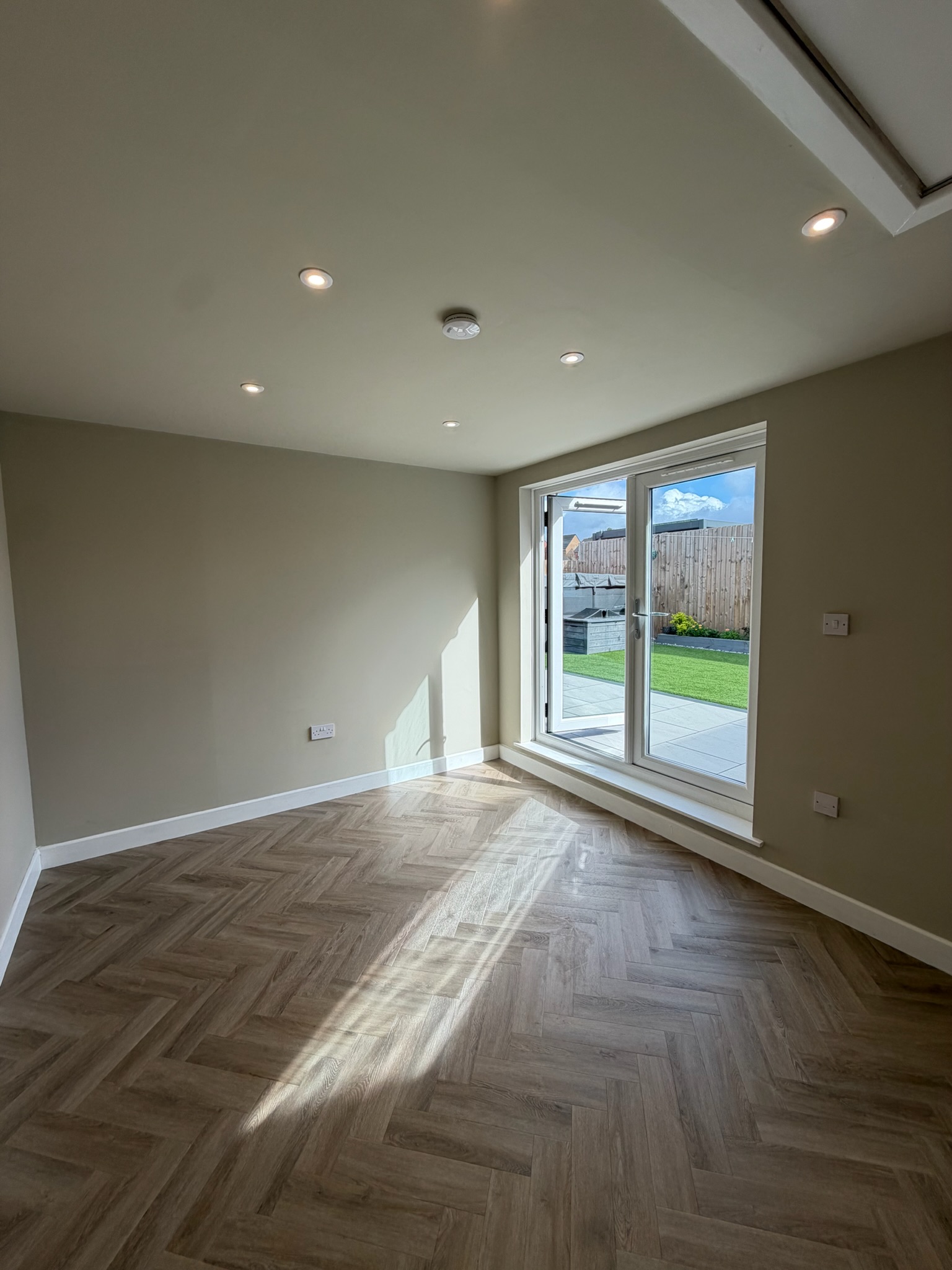
LVT has become one of the most popular choices for garage conversions, and for good reason. It’s thin, dense and durable, copes well with moisture, and many products are specifically rated for use with underfloor heating thanks to good heat conductivity, though it’s always worth checking the specific product’s rating rather than assuming every LVT is suitable. It holds up well in busier rooms like a home office, playroom or living area, resists scuffs from furniture and foot traffic, and needs very little ongoing maintenance beyond regular cleaning.
Carpet
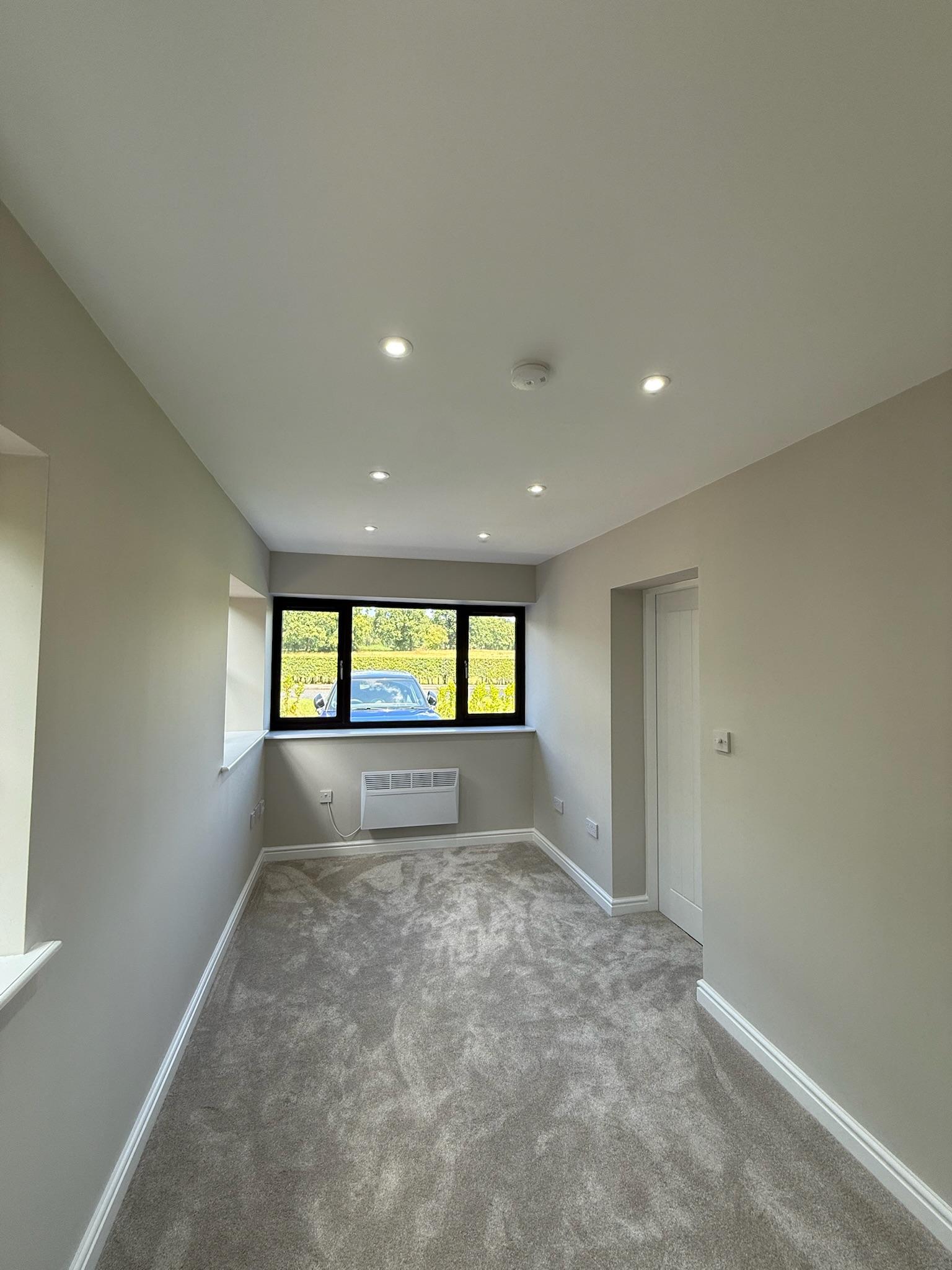
Carpet brings genuine warmth underfoot and useful sound insulation, which makes it a strong choice for a bedroom or a snug, particularly one that sits close to the rest of the living space. If underfloor heating is planned, the carpet and underlay combination needs to meet a suitably low thermal rating specified by the manufacturer, otherwise it can insulate against the heating rather than let it through effectively. Carpet is generally less suited to a home gym or a utility area, since it holds onto moisture, dust and general wear more than a hard flooring option, and it’s worth thinking carefully about it in a household with young children or pets prone to spills, since it’s considerably harder to keep clean than a hard finish.

Engineered Wood
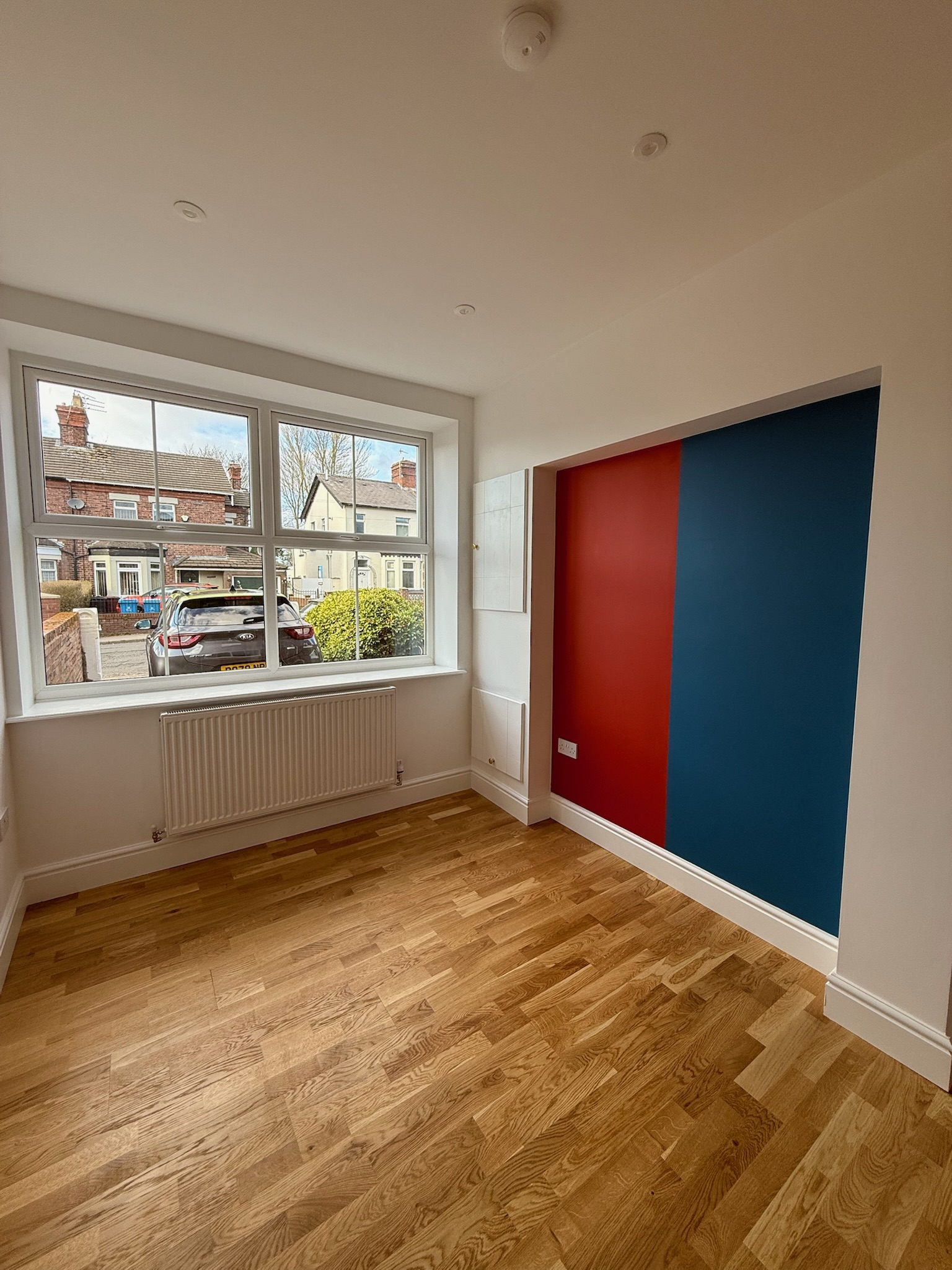
If you want the genuine look and feel of real timber, engineered wood is generally the more stable option for a garage conversion than solid wood, since its layered construction copes better with the kind of temperature and humidity changes a converted garage can still experience. Many manufacturers don’t recommend solid wood for use with underfloor heating at all, while a properly specified engineered wood product often can be, provided the specification explicitly permits it. It brings real warmth and character to a living room, office or bedroom, though it needs a little more care over time than a hard, sealed surface like LVT or tile.
Laminate
Laminate is worth considering as a lower cost alternative that still gives a realistic wood or stone look, and it’s generally hard wearing and straightforward to maintain. It performs reasonably well with underfloor heating in many cases, though as with any flooring, it’s worth checking the specific product’s rating rather than assuming. It’s a sensible option where budget is a genuine priority and you still want the appearance of a more premium finish.
Tiles And Stone
Tiles and natural stone conduct heat well, which makes them a particularly strong pairing with underfloor heating, and they suit a utility room or shower area especially well thanks to genuine moisture resistance. Without heating underneath, they can feel noticeably cold underfoot, and it’s worth knowing that a rigid material like tile is more likely to show cracking if there’s ever meaningful movement in the slab beneath it, which ties back to how the existing garage floor and any new foundation work were handled during the conversion itself, covered in our guide on whether garage conversions need new foundations.
Flooring For A Home Gym
Durability and moisture resistance matter most here, alongside a surface that can handle dropped weights and repeated impact without damage. LVT or a dedicated rubber gym flooring tend to be the strongest choices, both able to withstand equipment and regular activity considerably better than carpet or a softer laminate.
Flooring For A Playroom
Comfort for children playing on the floor matters alongside genuine durability, since playrooms see a lot of wear from toys, spills and general activity. LVT offers a good balance, warm enough underfoot with a rug added, but far easier to clean than carpet when something inevitably gets spilled.
Flooring For A Bedroom
Comfort tends to matter most here, which is exactly why carpet remains such a popular choice for a converted bedroom, alongside the genuine acoustic benefit if the room sits close to a busier part of the house. Engineered wood with a soft rug is a popular alternative for homeowners who prefer a harder floor with a warmer look than a fully tiled or LVT finish would give.
Flooring For A Home Office Or Living Room
LVT and engineered wood both work well here, practical enough for daily use while still looking considered and finished. The right choice often comes down to personal preference between the low maintenance of LVT and the natural character of engineered wood, rather than one being genuinely better suited than the other for this kind of everyday living space.
Flooring For A Utility Room Or Shower Area
Moisture resistance is the priority, which makes tile or a fully waterproof LVT the sensible choices here. Carpet and engineered wood are both generally unsuitable for a space that will regularly encounter water, whether from a shower, a washing machine, or wet outdoor clothing and footwear.
A Brief Note On What’s Underneath
Whichever flooring you choose sits on top of the insulation and damp proofing build-up already required for the conversion itself, covered fully in our guide on how to stop damp in a garage conversion. Getting that groundwork right matters more than the flooring choice on top of it, since even the best flooring will underperform over a poorly prepared subfloor.
Common Misconceptions About Garage Conversion Flooring
A lot of homeowners assume any flooring works fine with underfloor heating. It doesn’t automatically, thickness, density and the manufacturer’s own thermal rating all affect how well a specific product performs over underfloor heating, which is worth checking properly for the exact product you’re considering rather than assuming based on the material category alone.
Another common misconception is that solid wood is simply the premium version of engineered wood, and therefore always the better choice. For a garage conversion specifically, engineered wood is generally the more reliable option given the humidity and temperature swings involved, even though solid wood can be the right choice in more stable parts of a house.

Frequently Asked Questions
What’s the best flooring for a garage conversion?
It depends on how the room will be used. LVT suits most general living spaces well, carpet suits a bedroom, and tile suits a utility or shower area, particularly with underfloor heating.
Is solid wood flooring suitable for a garage conversion?
It’s generally not the recommended choice, since many manufacturers advise against it in spaces with more temperature and humidity variation, and engineered wood is the more stable alternative if you want a timber look.
Can I use carpet with underfloor heating in a garage conversion?
Yes, provided the combined carpet and underlay meets the manufacturer’s specified thermal rating, otherwise it can insulate against the heating rather than let it through effectively.
What’s the best flooring for a garage conversion home gym?
LVT or dedicated rubber gym flooring, both chosen for durability and their ability to handle equipment and repeated impact.
Does underfloor heating affect which flooring I should choose?
Yes, significantly. Dense materials like tile and LVT tend to transfer heat well, while thicker materials like carpet need a specific low thermal rating to avoid blocking the heat.
Why does the subfloor matter more than the flooring choice itself?
Because even the best flooring will perform poorly over a badly prepared subfloor. Proper insulation and damp proofing underneath matters more than the finish on top.
Why Choose Convert Your Garage
We help homeowners choose the right flooring for their specific garage conversion every week, based on how the room will genuinely be used rather than a one size fits all recommendation. Since 2002 we’ve completed over 4,315 garage conversions across Greater Manchester and the North West, and every project comes with a 10 year warranty.
How To Contact Convert Your Garage
Convert Your Garage
Established in 2002
4,315+ completed garage conversions
33 industry awards
10 Year Warranty
If you’d like to talk through your project, we’re always happy to help, whether you’re ready to book a survey or still at the research stage.
Telephone: 0161 766 6518
Website: https://www.convertyourgarage.com
Facebook: https://www.facebook.com/convertyourgarage/?locale=en_GB
