Can You Convert A Garage With A Gas Or Electric Meter In It?
Open the garage door and the first thing you see is a gas or electricity meter. It’s a common find, particularly where the garage was built on to the side of the house, and it’s a perfectly reasonable thing to worry about before converting. The honest answer is that a meter in the garage doesn’t automatically stop a conversion, but it can’t be ignored either, and the people who decide what happens to it aren’t always who you’d expect.
Why So Many Garages Hold The Meters
Utilities tend to enter a property through the nearest convenient wall, and for many houses that’s the garage. It’s why gas and electricity meters, and sometimes the main fuse, end up on a garage wall. That’s fine for a garage, but a converted room is a different environment, so the meters need to stay safe, accessible and properly housed once people are living in the space.
Who Owns What: Meter, Cut Out And Pipework
It helps to separate three things. Your energy supplier is the company you pay, and it’s usually responsible for your meter. The network operator owns the cables and pipes that bring the supply to your property. In Greater Manchester, that’s Electricity North West for electricity and generally Cadent for gas, although your bill, or the free 105 number for electricity, will confirm who yours is. Everything beyond the meter, the pipework and wiring inside the property, belongs to you and needs a Gas Safe registered engineer for gas and a qualified electrician for electrics. This split decides who you need to speak to.
Can The Meter Stay Where It Is?
Often it can, but it isn’t automatic. Whether a meter can stay inside a converted garage depends on the type of meter and supply, how it’s housed, whether it remains easy to reach and whether it’s adequately ventilated. That’s why it needs checking rather than assuming, ideally before the design is finalised and long before anyone starts building around it.
Gas Meters: Access, Ventilation And The Supply Pipe
For gas, the points that usually matter are easy access to the emergency control valve, adequate ventilation, and the type of supply pipe feeding the meter. A UK surveying training body notes that enclosing a meter that was designed to sit outside, for example by building around it, can create a compliance problem, and that some types of gas supply pipe shouldn’t run inside a building unless suitably protected. Pipework on your side of the meter is the owner’s responsibility and must be altered by a Gas Safe registered engineer.
The practical rule is simple. Don’t box in, cover or move a gas meter without confirmation from the right people first.
Electricity Meters And The Cut Out
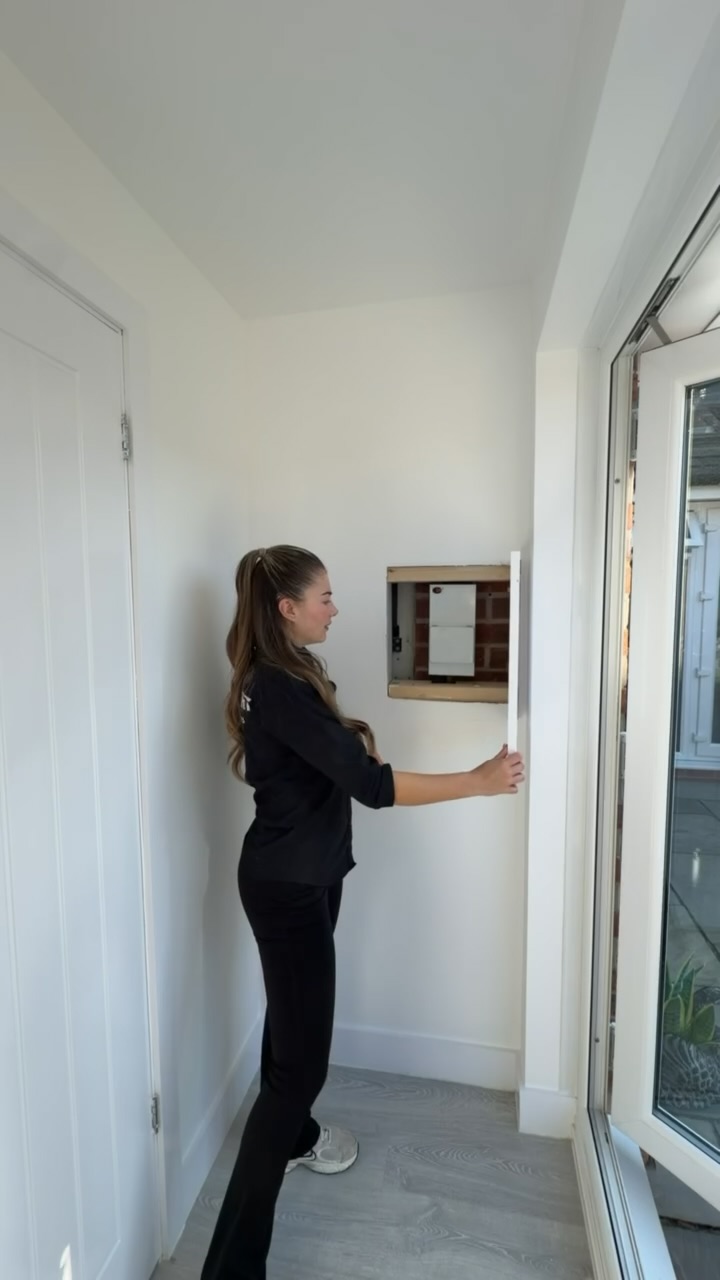
The electricity meter sits alongside the cut out, the main fuse where the supply enters the property, and that equipment belongs to the network operator. It isn’t something a builder or electrician should move on their own. Your electrician looks after your side of it, the consumer unit and circuits, which we cover in our guides on converting a garage with a fuse box and what electrical work a garage conversion needs.
Boxing In A Meter: What To Check First
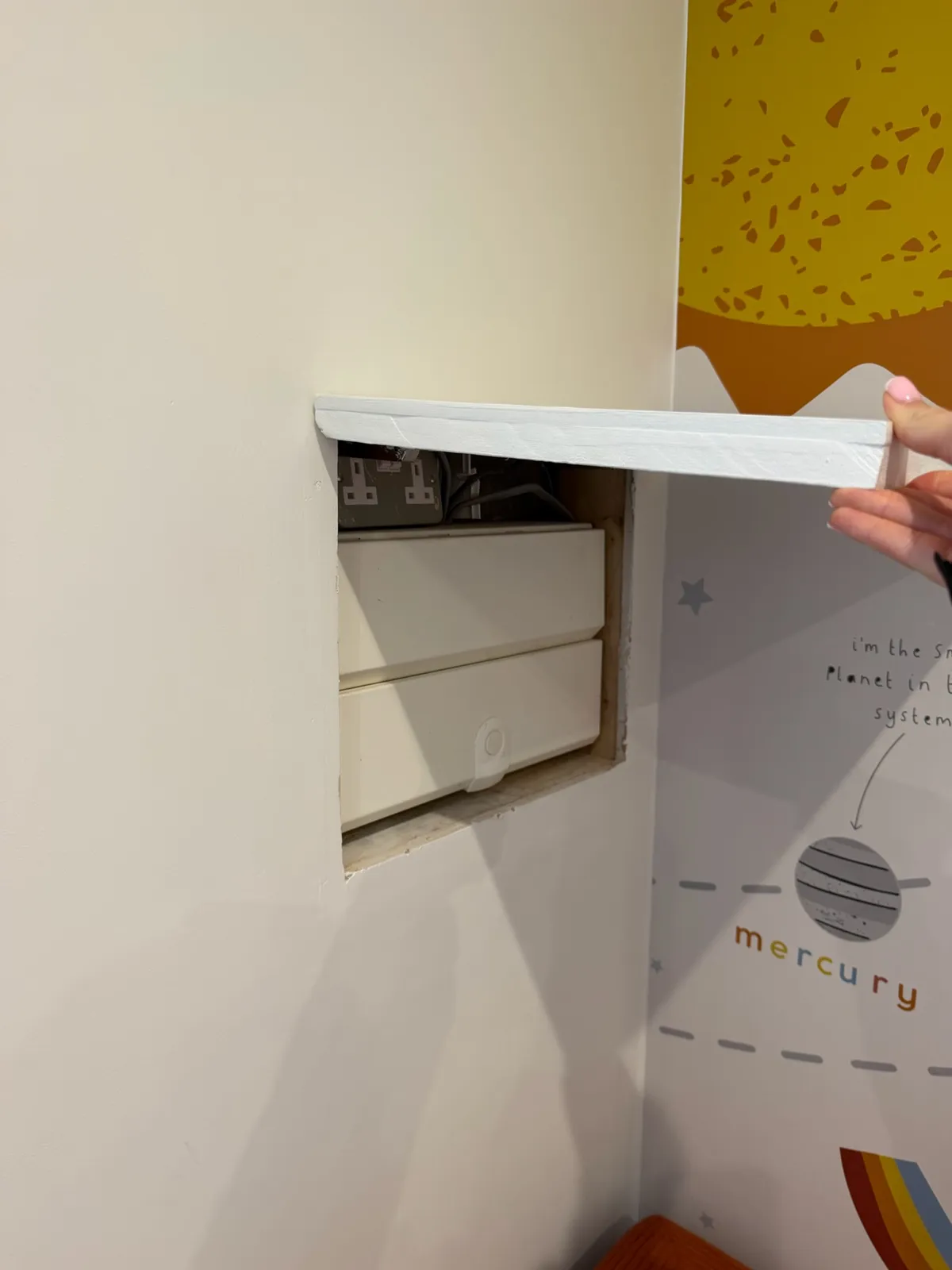
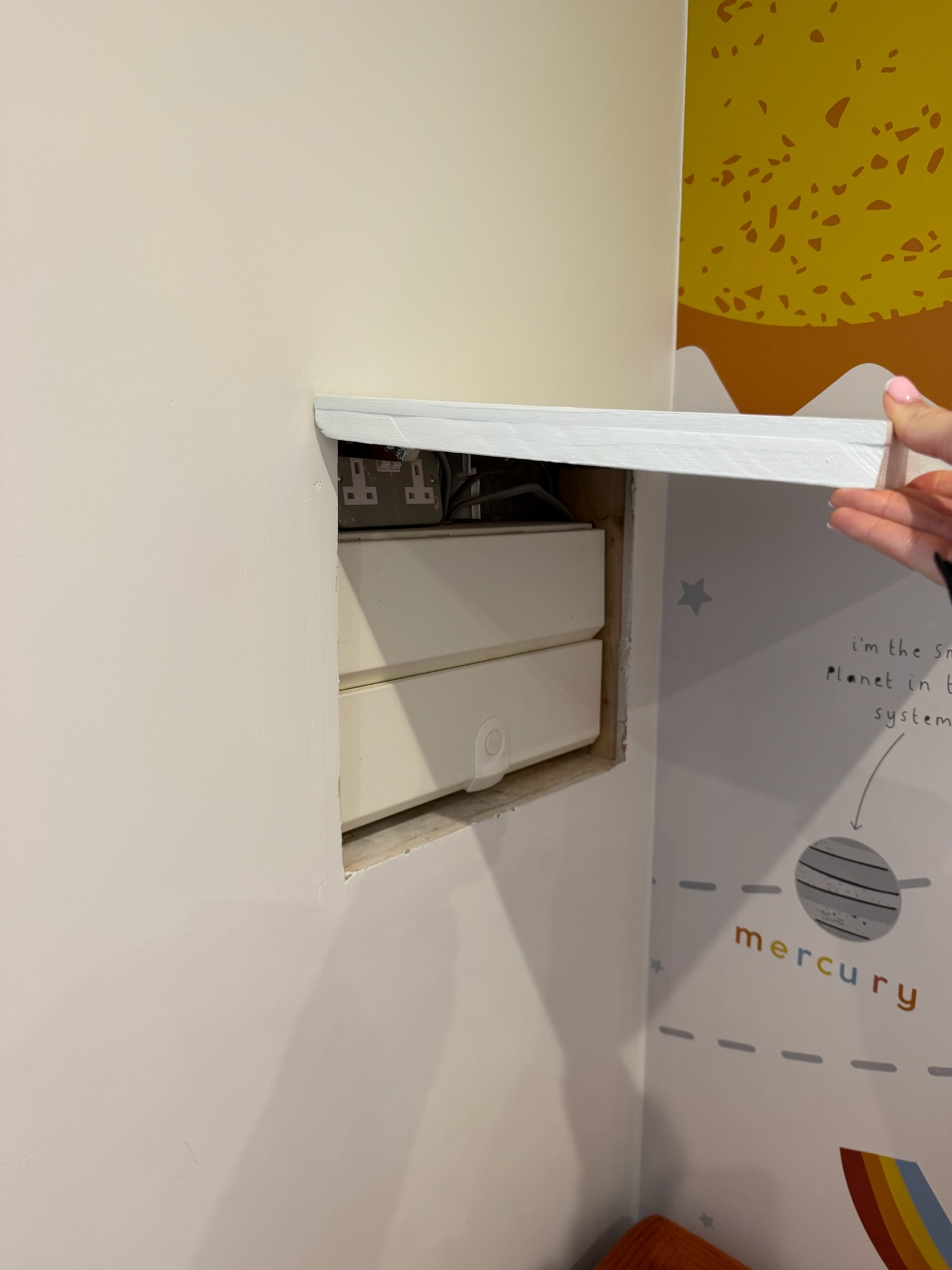
It’s a common question: can’t we just build a cupboard around it? Sometimes that works, but there are conditions. The meter has to stay accessible for readings, servicing and emergencies, a gas meter enclosure generally needs ventilation, and the enclosure shouldn’t block the emergency control valve. Whether a particular enclosure is acceptable is something to confirm with your supplier or network operator before you build it, not after the plasterboard is up.
Moving The Meter
If the meter can’t stay, there are two broad routes: a short move within the garage, or relocation to an external meter box. They involve different people, different lead times and different costs, and a short move along the same wall is usually simpler than relocating to another wall or the outside.
Who To Contact And What It Might Cost
You can’t move a meter yourself, and attempting to is illegal. Citizens Advice says to start with your energy supplier, who may be able to arrange it. If they can’t, the network operator does the work, and Citizens Advice says that usually costs at least £400 and can run beyond £1,000 depending on what’s involved. You may also need a Gas Safe engineer or electrician for work on your side of the meter, such as digging, fitting a new meter box or reconnecting your installation. Treat any figure as a guide, since prices vary by job.
Smart Meters And Meter Readings
If you have a smart meter, tell your supplier when you ask about a move. Even where you don’t, meter readers and engineers still need access, which is another reason to avoid hiding a meter behind fixed furniture or a locked room. A tidy, clearly labelled access panel can work better than trying to disguise it completely.
Designing The Room Around A Meter
Treat the meter as a fixed feature and plan around it. Leave clear access, avoid placing wardrobes or built in units in front of it, and position heating and sockets with it in mind. A meter on a short end wall can sit more comfortably in a room than one in the middle of a long wall, particularly in a narrow garage. If the meter is in the way of the layout you want, raise it early.
How Meters Affect Your Timeline
Moving a meter is arranged by third parties, so it can have its own lead time that doesn’t match a builder’s programme. If a move is needed, start the conversation early and avoid committing to a start date that depends on it without confirmation. Our guide on doing a garage conversion in stages explains why sequencing matters, and the same principle applies here: decisions about services belong at the beginning, not the middle.
Common Misconceptions About Meters In Garages
A lot of homeowners assume their builder or electrician can simply move the meter. They can’t, because the meter and the supply equipment belong to the supplier and network operator.
Another common belief is that a meter has to move outside. Sometimes it does, but not always, and in some cases it can stay where it is if the relevant requirements are met.
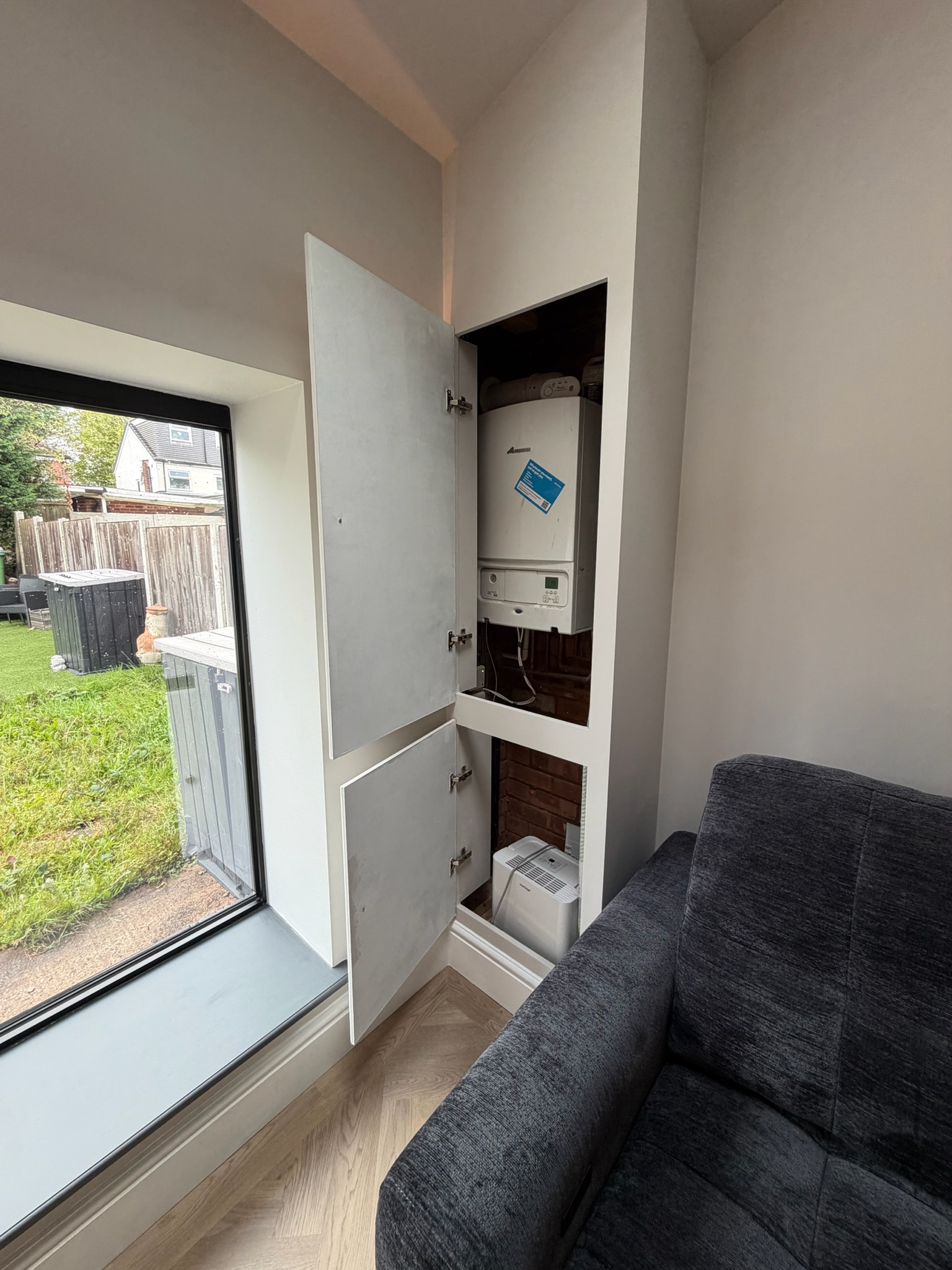
A third is that boxing it in with plasterboard solves the problem. It can create one, if access and ventilation aren’t properly considered. Our guide on converting a garage with a boiler in it covers a related question for another common garage occupant.
What To Raise At Your Survey
If your garage has any meters, mention them when you book your survey. Note whether they’re gas, electric or both, roughly how far they sit from where you’d like the new door, window or walls, and whether you’ve had any previous work done on them. It means the layout, the quotation and the timing can all be planned around them. Our garage conversion checklist is a useful way to gather these details before you start.
Frequently Asked Questions
Can I convert my garage if the gas meter is inside it?
Often yes, but it needs checking. Access to the emergency control valve, ventilation and the type of supply pipe all matter, so confirm the position with your gas supplier or network operator before work starts.
Can I box in a gas or electricity meter?
Sometimes. The meter has to stay accessible and, for gas, ventilated, and the enclosure shouldn’t block the emergency control valve. Confirm with your supplier or network operator before building it.
Can my builder or electrician move the meter?
Not on their own. The meter and the supply equipment belong to your supplier and network operator, so they arrange the move. A Gas Safe engineer or electrician then deals with your side of it.
Who do I contact to move a meter?
Start with your energy supplier. If they can’t do the work, contact your network operator, which in Greater Manchester is Electricity North West for electricity and generally Cadent for gas.
How much does it cost to move a meter?
Citizens Advice says network operator work usually costs at least £400 and can exceed £1,000, depending on what’s involved. Treat that as a guide and ask for a quote.
Will a meter delay my garage conversion?
It can if a move is needed, because suppliers and network operators have their own lead times. Raising it early lets the timing be planned around it.
Why Choose Convert Your Garage
We’ve been converting garages since 2002, and a meter in the garage is something we expect to talk through. As a family run company that has completed over 4,400 garage conversions across Greater Manchester and the North West, we’d rather it was raised at your free survey than discovered halfway through the plan. Every conversion comes with a 10 year warranty.
How To Contact Convert Your Garage
Convert Your Garage
Established in 2002
4,400+ completed garage conversions
30+ industry awards
10 Year Warranty
If you’d like to talk through your project, we’re always happy to help, whether you’re ready to book a free survey or still at the research stage.
Telephone: 0161 766 6518
Website: https://www.convertyourgarage.com
Facebook: https://www.facebook.com/convertyourgarage/?locale=en_GB
